Newsletter Subscribe
Enter your email address below and subscribe to our newsletter
[forminator_form id="25163"]

All voices matter
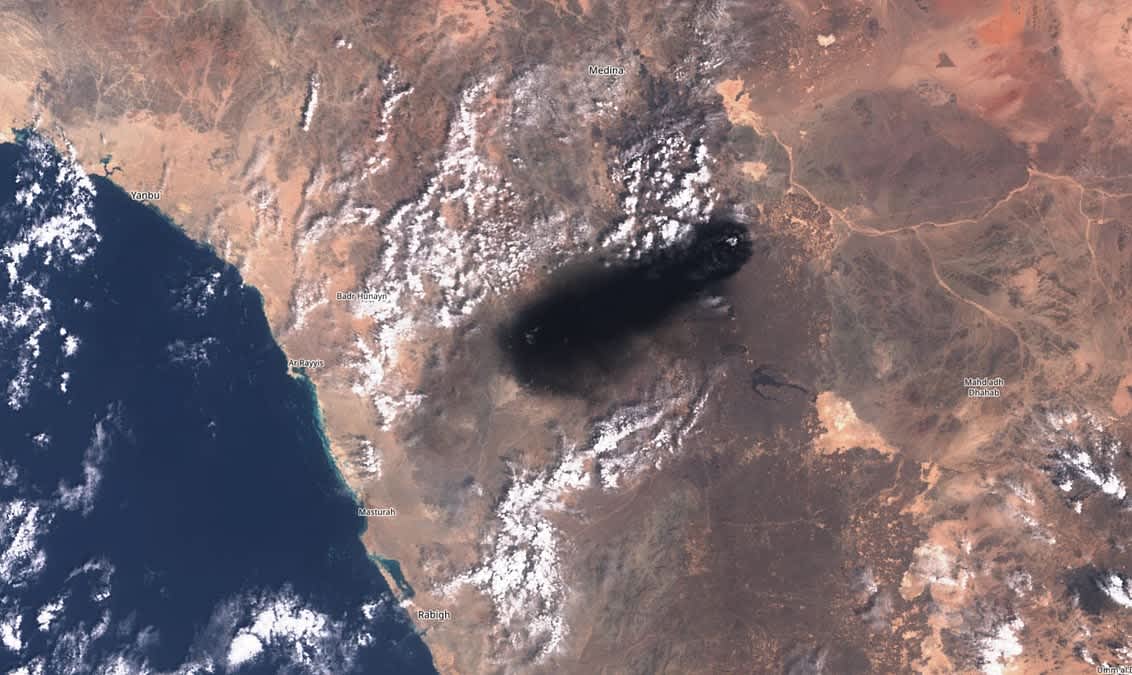
investinglive+1investinglive+1investinglive+1Reports emerged Friday of a Houthi strike on Saudi Arabia's East-West crude oil pipeline, with satellite imagery showing fire hotspots along the 1,200-kilometer Petroline near Medina, sending Brent crude surging above $107 a barrel and rattling global energy markets already on edge from the widening Iran war. As of Friday morning, no official confirmation had come from Saudi Aramco or Saudi authorities, and the claims were being treated as unverified.investinglive+1
NASA's FIRMS fire-detection system showed clustered thermal anomalies along the pipeline's route southeast of Medina, toward Mahd adh-Dhahab, while open-source researchers cited Sentinel-3 satellite passes from September 9 and 10 showing a large smoke plume and elevated thermal signatures at multiple points along the route. Gulf News reported that FIRMS data alone cannot identify what is burning or establish responsibility.gulfnews+1
The pipeline, also known as the Petroline, runs from the Abqaiq oil field in Saudi Arabia's Eastern Province to the Red Sea port of Yanbu and has a stated capacity of up to seven million barrels per day. Its strategic value has grown sharply during the conflict with Iran, as it allows Saudi Arabia to move crude to the Red Sea without routing it through the Strait of Hormuz, where traffic has collapsed to roughly seven vessel transits per day, according to Reuters Thomson Reuters Corporation , down from an average of 14.investinglive+1
The pipeline was hit in a confirmed attack in April that cut throughput by an estimated 700,000 barrels per day before Saudi Arabia restored it to full capacity.gulfnews+1
The reported pipeline fire comes as Houthi forces seized Yemen's Red Sea port of Mokha, near the Bab al-Mandab Strait, advancing the group closer to a vital maritime chokepoint. The Associated Press reported shipping through Bab al-Mandab had already fallen about 60 percent due to earlier Houthi attacks. The seizure, combined with the potential pipeline disruption, threatens to pressure Saudi Arabia's two major alternative export pathways simultaneously.timelinedaily+2
The escalation follows days of intensifying conflict. On September 8, Houthis launched a major wave of missile and drone attacks on southern Saudi Arabia, striking areas around Jazan, Abha, and Khamis Mushait and wounding dozens of people. Houthi military spokesman Yahya Sarea said the group fired 14 drones and eight ballistic missiles in a "wide" cross-border barrage. Saudi Arabia responded with retaliatory strikes in Yemen.gulfnews+3
Brent crude surged more than 5 percent on Thursday, while Asian markets fell broadly on Friday. Japan's Nikkei 225 dropped nearly 3 percent and South Korea's Kospi fell around 2.5 percent in early trading. The U.S. 10-year Treasury yield rose above 4.97 percent, its highest level since October 2023, as rising oil and inflation data weighed on risk sentiment. U.S. stocks had declined for a fourth consecutive session on Thursday, with the Nasdaq Composite, Dow, and S&P 500 each falling roughly 0.5 percent.moneycontrol+1
Should the pipeline damage be confirmed, analysts widely view it as the kind of event capable of materially disrupting Saudi export capacity at a moment when the kingdom's crude production has already fallen to 6.24 million barrels per day, according to OPEC data cited by the Wall Street Journal News Corp .gulfnews