Newsletter Subscribe
Enter your email address below and subscribe to our newsletter
[forminator_form id="25163"]

All voices matter
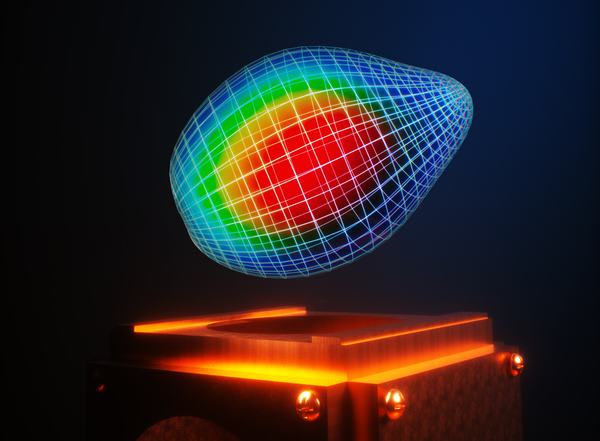
caltech+1caltech+1phys+1For the first time, researchers have created chilled molecules containing the radioactive element radium, bringing them into a state suitable for laser-based quantum precision measurements. The achievement, published in the journal Science on July 16, opens a new path for tabletop experiments that could help explain one of physics' deepest mysteries: why matter dominates over antimatter in the universe.caltech+2
A team led by Nick Hutzler, professor of physics at Caltech, developed the technique after years of trial and error working with radium — an element that is radioactive, highly reactive, and available only in tiny quantities. The research also involved collaborators at Johns Hopkins University and Michigan State University.phys+1
Radium's appeal lies in the unusual pear shape of its nucleus. "Pear-shaped nuclei are asymmetric and dramatically amplify the potential signals we are looking for to explain the asymmetry in matter and antimatter," Hutzler said. "Radium has the rare pear shape we want, it has been studied extensively by nuclear physicists, and it makes molecules that are ideal for laser-based quantum precision measurements."caltech+1
Handling microscopic quantities of a dangerous radioactive element required creative problem-solving. The team stabilized the radium by embedding it in a viscous goo produced through a process resembling candy-making — dissolving radium in water and a sugar substitute, then evaporating the water. After experimenting with actual sugar, which proved unreliable, they settled on the sugar-free sweetener xylitol.phys+1
The radium-laden goo was placed on gold foil inside a chamber cooled to roughly minus 450 degrees Fahrenheit using helium gas. Lasers then excited the radium atoms into a reactive state, prompting them to form molecules — radium monohydroxide, monodeuteroxide, and monofluoride — which could be studied with high-resolution laser spectroscopy.caltech+2
The molecules are now ready for use in quantum precision measurements, where they act as sensors for particles and forces not predicted by known physics. "The molecules act like antenna to amplify the properties we are looking for," Hutzler said. The method can also be applied to atoms other than radium, broadening its potential impact across fundamental physics research.caltech