Newsletter Subscribe
Enter your email address below and subscribe to our newsletter
[forminator_form id="25163"]

All voices matter
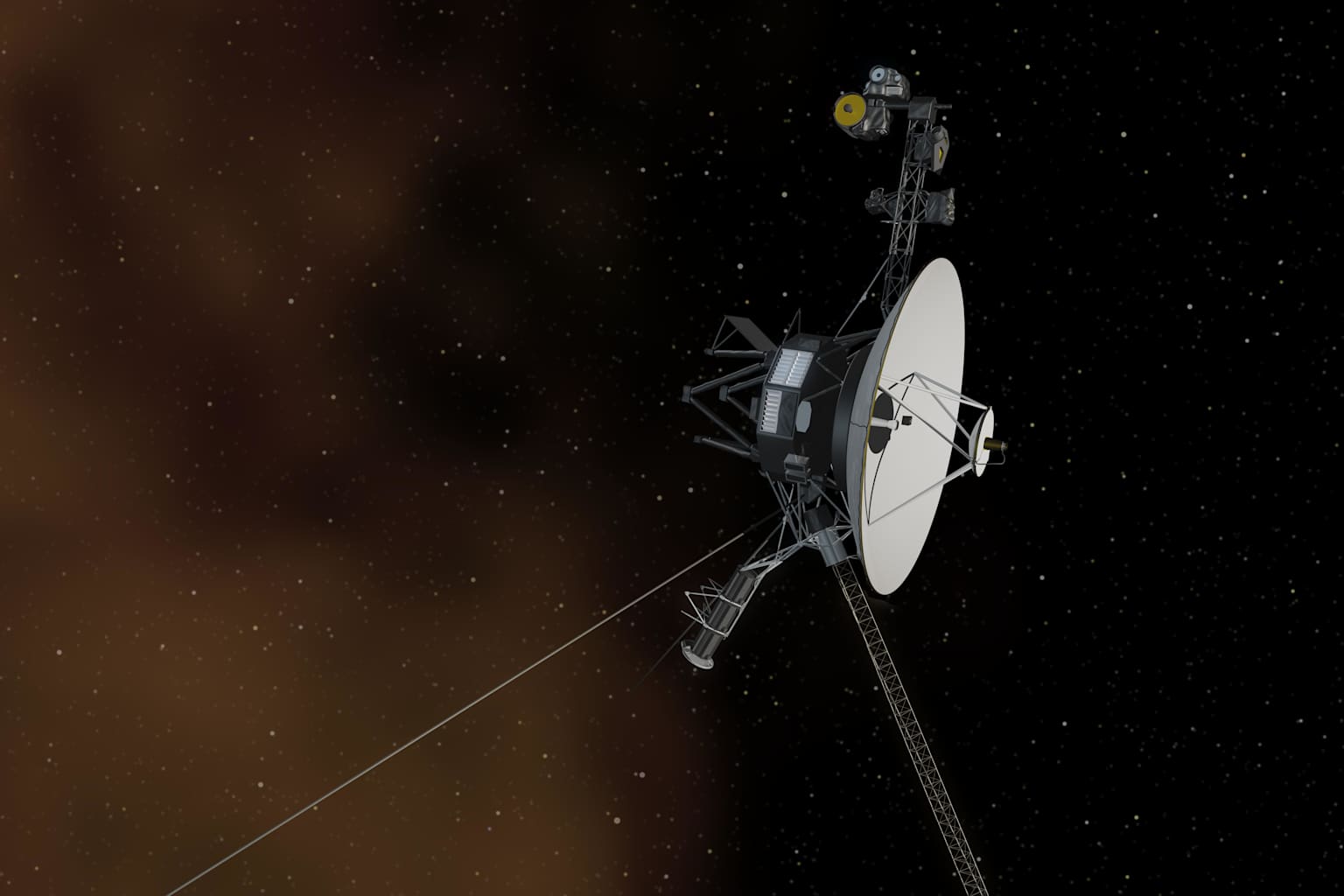
smithsonianmag.com+1.science.nasa.gov.science.nasa.gov.NASA's Voyager 1 reached a distance of one light-day from Earth at 5:16:07 a.m. EST on Wednesday, Nov. 18, 2026. No other human-made object has been that far away. The milestone lands at a difficult moment: the spacecraft stopped sending usable data days before it got there, according to NASA.science.nasa.gov
A light-day is how far light travels in 24 hours, which works out to 16,094,799,096 miles (25,902,068,356 kilometers), NASA says. Voyager 1 needed 49 years, two months and 11 days to cover that distance after its 1977 launch. A radio signal now takes a full day to travel between Earth and the probe in either direction, according to EarthSky.earthsky.org+1
The mission team learned on Nov. 14 that Voyager 1 had stopped sending science and engineering data. A Deep Space Network antenna in Canberra, Australia, could pick up the spacecraft's carrier signal, but no data came with it, NASA reported. The carrier signal shows that the probe is still pointed at Earth and that its antenna works. Engineers think the problem is in the onboard computer that collects and formats data. They are also checking whether it is linked to an October outage, when contact was lost for about 48 hours.science.nasa.gov
NASA said the team will confirm the milestone on Thursday, Nov. 19, using the carrier signal and trajectory calculations. Voyager 1 cannot change its speed, so engineering problems have no effect on when it reaches the mark. Because of the 24-hour signal delay, diagnosing the fault "may take weeks or longer," the agency said. NASA's Jet Propulsion Laboratory will hold a public discussion about both Voyagers at 12 p.m. EST on Nov. 19, according to a NASA advisory.nasa.gov+1
NASA asked people to "Shine Bright for Voyager's Light-Day" after sunset on Nov. 17 by flashing V-G-R, the mission's call sign, in Morse code toward the sky, according to the agency. The Planetary Society held a livestream with JPL mission leaders on the evening of Nov. 18. "All of us — everyone on Earth — have been touched by these missions," Bill Nye, the society's chief ambassador, said in remarks quoted by EarthSky.science.nasa.gov+1
Eight of Voyager 1's 10 original instruments no longer work, and its plutonium power source weakens a little every year, writes Matthew Shindell of the Smithsonian's National Air and Space Museum. He notes that the probe crossed into interstellar space in August 2012 and will mark 50 years in space on Sept. 5, 2027. Its twin, Voyager 2, should reach one light-day from Earth in November 2035, according to NASA.smithsonianmag.com+1
NASA expects to lose both spacecraft eventually "to unresolvable engineering issues." The agency says it will still do "everything it can to keep them operating and delivering science for as long as possible," the mission team wrote.science.nasa.gov