Newsletter Subscribe
Enter your email address below and subscribe to our newsletter
[forminator_form id="25163"]

All voices matter
ians+1.imf+2.nationthailand+1.The International Monetary Fund now assumes crude oil will average $95.74 a barrel in 2026, up from $67.74 in 2025. The Fund also warned that a long stalemate or further escalation in the Middle East could keep energy and food prices high and volatile. The assumption, published on Tuesday in the October 2026 World Economic Outlook, eases to $87.39 a barrel in 2027. It is based on futures markets and uses a simple average of Brent, Dubai Fateh and West Texas Intermediate crude.ians
The figure is the IMF's third increase in the oil assumption this year. The April outlook assumed $82.22 a barrel, and the July update raised it to about $89. The Fund said the latest number amounts to a 41% rise in crude prices and a 48% rise in natural gas prices compared with 2025.imf+2
The IMF raised its 2026 global growth forecast to 3.1% from 3% in July, as investment in artificial intelligence offset part of the damage from the war. Growth is still slower than last year's 3.5%, CNBC reported. Global inflation is expected to rise to 4.7% this year before easing to 4.1% in 2027. The Fund now expects the Strait of Hormuz to reopen in March 2027 and conditions to return to their pre-war state by October 2027.cnbc
Without flexible supply responses, the Fund said, losing oil from the Hormuz closure would have pushed prices to about $110 a barrel and cut 2026 growth by 0.9 percentage point. Rerouted Gulf output, higher production elsewhere and drawdowns of stockpiles lowered the implied price to about $85.ians
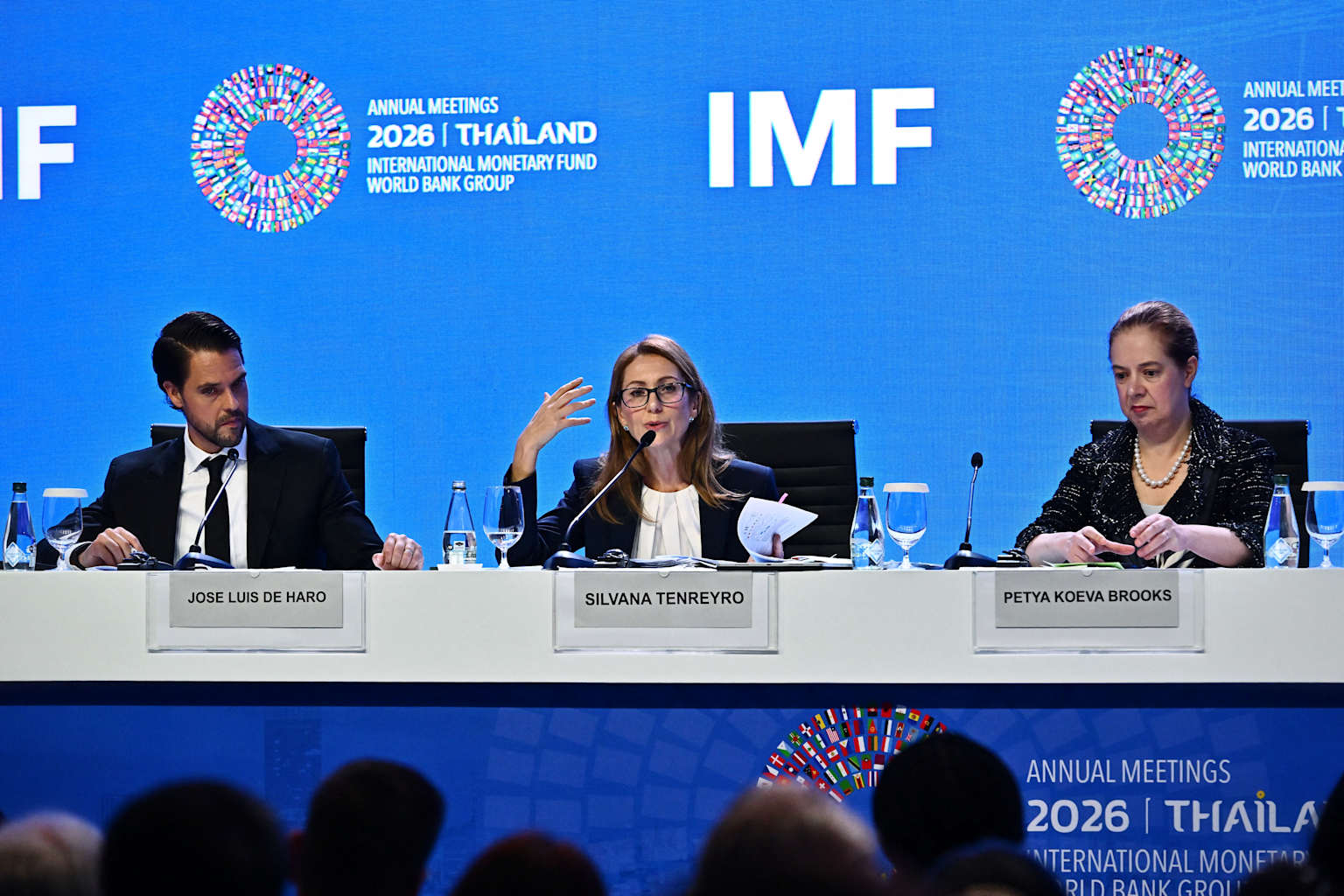
"The global economy has been resilient, but that resilience is reaching its limits," IMF Chief Economist Silvana Tenreyro told reporters at the annual meetings in Bangkok. She urged governments to restore fiscal space and rebuild supply-side resilience. Tenreyro also warned that some buffers, "in particular inventories and energy efficiency gains, are reaching their limits". Global oil reserves are being drawn down by about 2.7 million barrels a day.nationthailand+1
The WEO said energy importers with little link to the technology supply chain face "the most difficult configuration: higher import costs and exchange rate pressures, weaker real incomes, more constrained fiscal space, and fewer offsetting demand impulses". Exporters outside the conflict zone benefit from favorable terms of trade.ians
Gulf producers have been hit hard. The IMF expects Saudi Arabia's economy to shrink 3.3% this year. It also projects contractions of more than 15% in Iraq, Kuwait and Qatar. Asian economies that make AI hardware have held up better. "The AI boom has more than offset the weaknesses coming from the commodity markets," Tenreyro said.oilprice+1
The Fund said markets still treat the disruption as largely temporary, citing backwardation in oil futures, but warned that expectations "could shift toward the shock being more persistent" if tensions continue.ians