Newsletter Subscribe
Enter your email address below and subscribe to our newsletter
[forminator_form id="25163"]

All voices matter
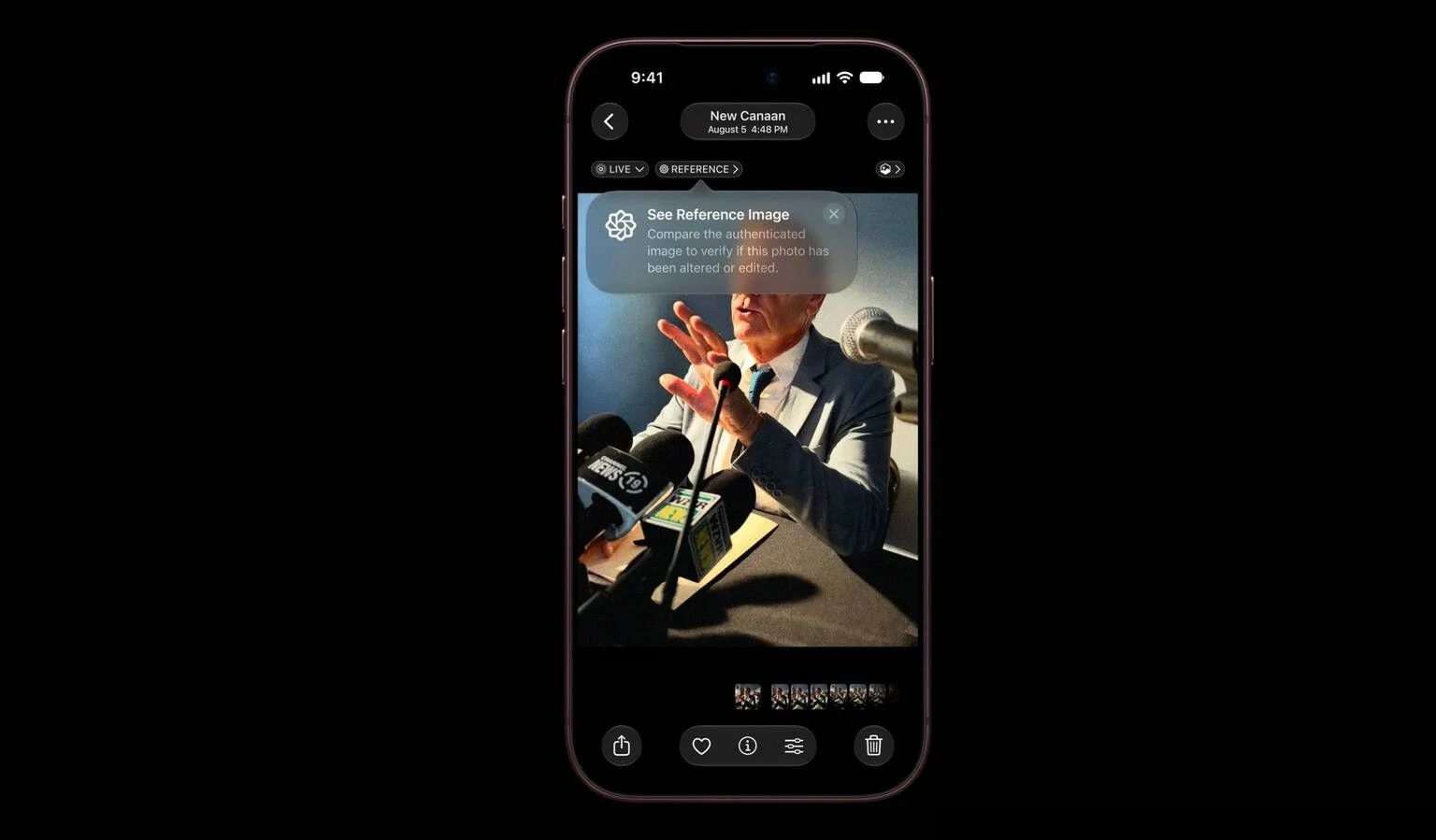
security.applesecurity.applesecurity.appleApple on Monday published a detailed technical explanation of how its new Reference Image feature works on the iPhone 18 Pro and iPhone 18 Pro Max, laying out a system designed to cryptographically prove that a photograph was captured by a real camera sensor and has not been altered.
The feature, which debuted alongside the iPhone 18 Pro lineup, is Apple's answer to an increasingly urgent problem: AI tools have made it trivially easy to generate or manipulate photorealistic images, eroding trust in photography as a record of real events.security.apple+1
Apple Reference Image splits the verification process into two phases. First, the iPhone's camera sensor boots into a specialized reference mode and cryptographically signs the raw pixel data immediately after capture, creating what Apple calls a "secure digital negative." This signing happens inside the sensor hardware itself, before the device's operating system ever touches the data, preventing tampering or data injection attacks.9to5mac+1
The negative is stored on-device alongside a conventional photo. When a user chooses to "develop" it, the negative is uploaded to Apple's Private Cloud Compute infrastructure, where demosaicing, tone mapping, and compression are performed in a verifiable environment. The final JPEG is signed with a composite post-quantum signature combining RSA-3072 and ML-DSA-87 — a defense Apple says is designed to keep images verifiable even against future quantum computing attacks.security.apple+1
Apple explicitly positions Reference Image as more secure than existing approaches based on the C2PA standard, which is used by other device makers. C2PA attaches provenance metadata after capture and certifies the editing history from that point forward, but Apple argues this leaves images vulnerable to compromise at any point in the chain. Apple says Reference Image is, to its knowledge, "the only image provenance system that provides quantum-secure defenses".security.apple+1
A distinguishing element is the system's approach to photographer privacy. Unlike other provenance systems that tie an image to a public identity or device, Apple Reference Image signs the final image with Apple's own signing service after validation, meaning an outside observer cannot determine whether two reference images came from the same device. Image contents are never exposed to Apple, thanks to the architectural privacy guarantees of Private Cloud Compute.macrumors+2
The feature is opt-in and limited to the main camera sensor on iPhone 18 Pro and Pro Max. If a sensor is later found to be compromised, Apple can revoke its images without revealing which photographs came from the same device.security.apple+1