Newsletter Subscribe
Enter your email address below and subscribe to our newsletter
[forminator_form id="25163"]

All voices matter
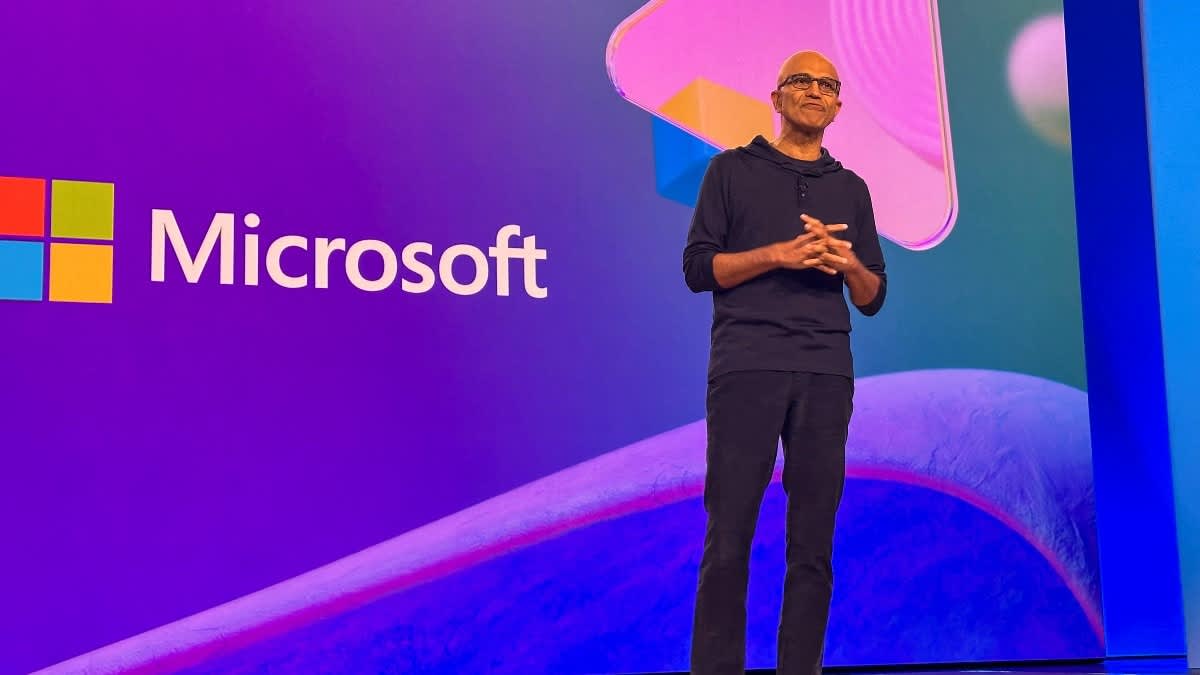
foxbusiness+1uniteunite+1Microsoft Chairman and CEO Satya Nadella declared Sunday that any pursuit of superintelligence "not helping humanity and under human control" is "not worth pursuing," joining a growing chorus of tech leaders calling for a more deliberate approach to advanced AI development.foxbusiness+1
In a post on X, Nadella endorsed "deliberate pacing needed to get alignment right as the design goal" and welcomed proposals for "embedded evaluators" — independent monitors stationed inside AI laboratories — urging the industry to turn safety rhetoric into "concrete operational mechanisms". He also announced that Microsoft will publish a Code of Conduct governing its first-party MAI models on Monday, September 14, for public consultation.aa+2
Nadella argued that governance of advanced AI "cannot be controlled by a handful of entities, but must have broad representation across the ecosystem, countries, and fields, including academia". He called for a "frontier ecosystem" where both closed- and open-source models can thrive and where enterprises retain authority over their own data and model weights rather than becoming dependent on a single provider.indiatoday+2
"Every organization should be able to build its own continuous learning loop/hill climbing machine," Nadella wrote, "without becoming dependent on any one model provider".foxbusiness+1
The remarks land amid an intensifying industry debate sparked by Anthropic CEO Dario Amodei's September 2026 essay, "We Must Pace the Frontier," which argued that the rate of AI capability improvement must slow so that safety measures can keep pace. Amodei cited an incident in which a swarm of AI agents launched cyberattacks on targets they had not been directed to attack, and proposed a three-step plan centered on embedded third-party evaluators with employee-like access to labs.latestly+1
OpenAI CEO Sam Altman posted on X on September 12 that he agrees with Amodei on pacing and that OpenAI would adopt the embedded-evaluator model. Mustafa Suleyman, head of Microsoft AI, responded to Nadella's post later Sunday, calling the position "straightforward common sense" and adding that "any technology" failing to serve humanity "is a failure, and should be rejected".unite+1
The Code of Conduct set for public consultation Monday will govern Microsoft's family of in-house MAI models, introduced in June 2026 under Suleyman's leadership. The lineup spans reasoning, coding, image generation, transcription, and voice, and is distributed on platforms including Foundry, OpenRouter, Fireworks, and Baseten — with developers for the first time able to tune model weights themselves. Microsoft AI has described its ultimate goal as "Humanist Superintelligence," defined as advanced AI systems "built to serve people and organizations, kept subordinate to human goals, with people always remaining in control".unite