Newsletter Subscribe
Enter your email address below and subscribe to our newsletter
[forminator_form id="25163"]

All voices matter
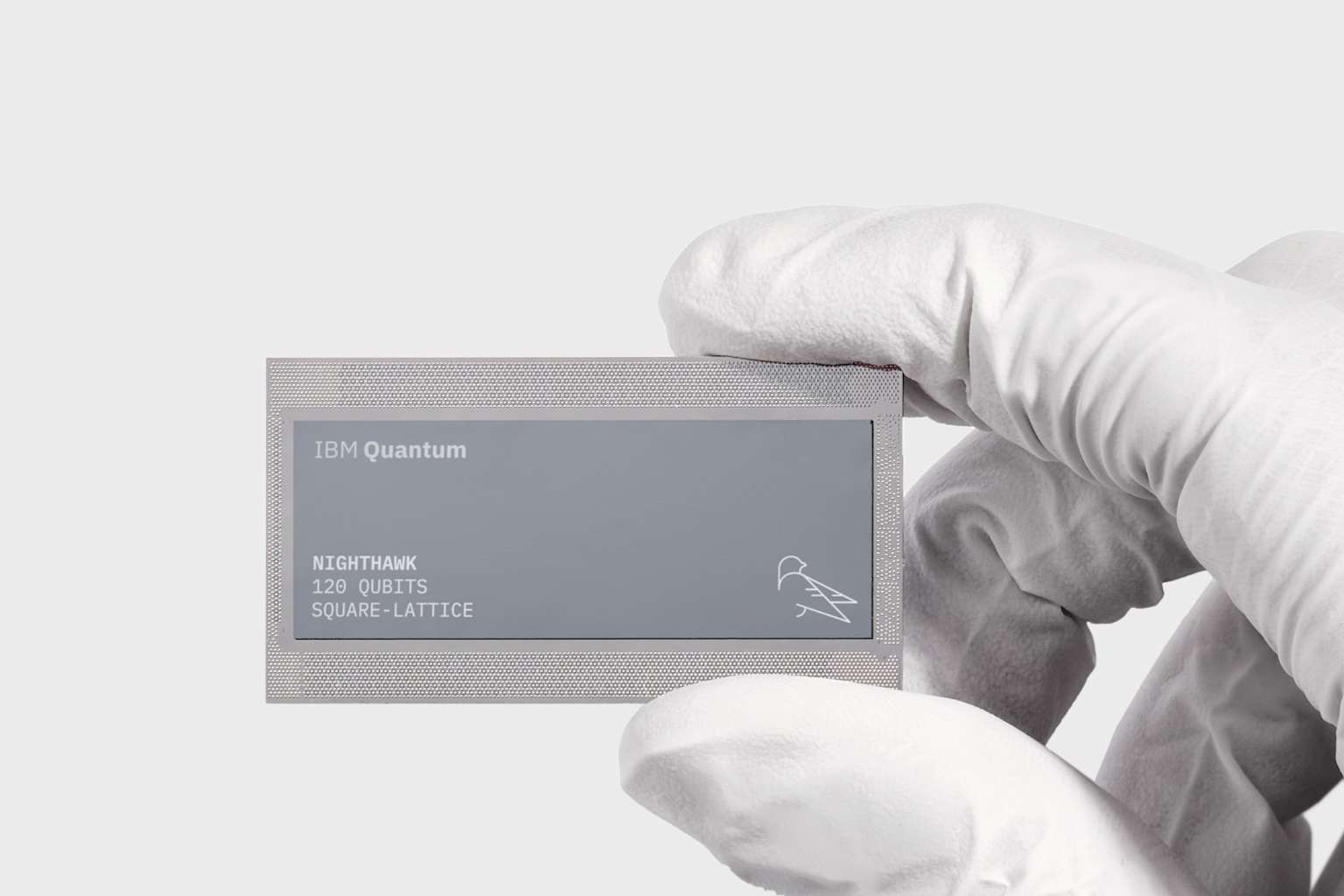
ibm+1quantumcomputingreport+1backendnews+1IBM International Business Machines Corporation has made available its fastest quantum processor, the Nighthawk r2, a 120-qubit chip capable of executing more than 100,000 quantum circuits per second — 25 times the throughput of the company's Heron processors. The processor, deployed as IBM Phoenix on the IBM Quantum Platform, achieves its speed gains not by adding qubits but by fundamentally rethinking how qubits are reset between calculations.backendnews+2
Quantum processors run the same circuit thousands of times to build reliable results. Between each run, qubits must be returned to a clean starting state — a process that on earlier IBM systems could require hundreds of microseconds of idle time. Nighthawk r2 replaces that waiting period with what IBM calls a "dissipative reset gadget," a dedicated component for each qubit that rapidly drains excess energy by coupling it to a cold environment. The technique drops the effective relaxation time from about 200 microseconds to roughly 25 nanoseconds, cutting idle periods between circuit runs to as little as one microsecond.thequantuminsider+2
The processor contains 120 programmable qubits, 218 couplers, and 120 independent reset elements — 458 physical quantum elements in total. IBM said the reset operation does not measurably degrade the performance of surrounding qubits, and initialization errors are reduced by approximately 25 times while maintaining Heron-class gate accuracy.quantumcomputingreport+3
IBM reported that Nighthawk r2 has already produced accurate results from circuits containing more than 7,500 gates, meeting a target on the company's 2026 quantum development roadmap. In one benchmark, the processor completed neutron-scattering simulations 12 times faster, generating material spectra comparable with laboratory data in about 60 seconds.ibm+3
The processor also supports mid-circuit qubit resets, a feature critical for quantum error correction research. This allows auxiliary qubits used for error checks to be rapidly recycled during a computation rather than only between runs.thequantuminsider+1
The release reflects a broader shift in how quantum hardware progress is measured. Raw qubit counts, long the industry's headline metric, are giving way to measures of speed, quality, and practical throughput. IBM has committed more than $10 billion over five years to quantum computing across R&D, manufacturing, and partnerships, and targets fault-tolerant quantum computing with its Starling system by 2029. Nighthawk r2 is not a fault-tolerant machine — its physical qubits remain susceptible to noise — but it addresses one concrete engineering constraint on the path toward that goal.tradingview+2