Newsletter Subscribe
Enter your email address below and subscribe to our newsletter
[forminator_form id="25163"]

All voices matter
wixxwixx+1moneycontrolNvidia on Thursday denied a report that it plans to begin shipping a language processing unit tailored for Chinese customers by the end of the year, calling the claims "incorrect" even as U.S. export controls continue to reshape its approach to the world's second-largest AI market.
The Information reported earlier Thursday, citing two Nvidia employees, that the company planned to begin small-batch shipments of an AI chip designed for Chinese customers by year-end and that several customers had already placed orders. The chip was described as a version of Nvidia's LPU — a processor developed using technology licensed from startup Groq that works alongside GPUs to accelerate AI chatbot responses.wixx+1
The publication said the chip complied with U.S. export-control rules without requiring reductions in raw processing power, though Nvidia had modified software to allow the LPU to operate with processors available in China after its next-generation Vera Rubin AI system became unavailable there due to U.S. restrictions.tradingview
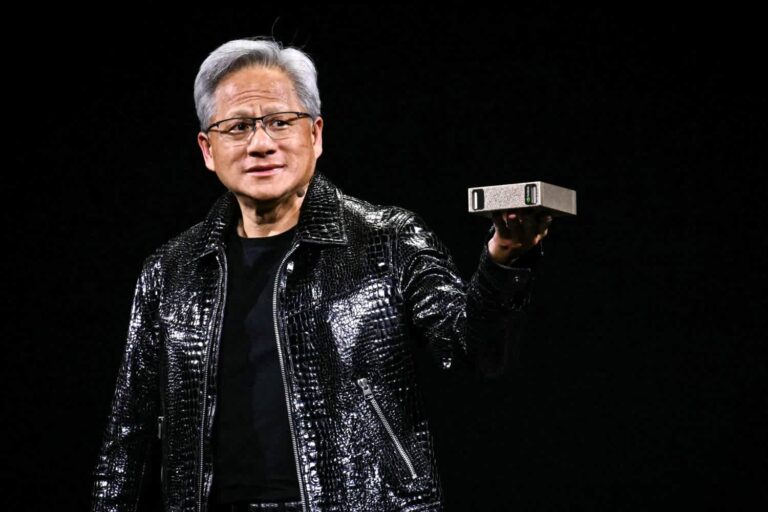
Nvidia pushed back swiftly. "The reporting in The Information on Nvidia's LPU is incorrect. We have no LPU sales in the China market today, and no China-specific LPU product in our roadmap," an Nvidia spokesperson told Reuters.wixx
The episode underscores the turbulence surrounding Nvidia's China strategy. Washington in May approved sales of the company's H200 AI chips to a limited group of Chinese firms, including Alibaba , Tencent, and ByteDance, though deliveries only recently began. The Financial Times reported Tuesday that ByteDance and Tencent had each received around 10,000 H200 chips in recent weeks, though Chinese regulators have asked the companies to keep the hardware outside mainland China.moneycontrol+1
Nvidia has also been marketing its Vera CPU to Chinese customers. CEO Jensen Huang acknowledged in May that the company had "largely conceded" China's AI chip market to Huawei Technologies, which has emerged as its main domestic rival.wixx+1
The report from The Information pointed to surging demand for inference hardware in China as a potential opportunity. Chinese AI firms face acute capacity shortages — Moonshot AI recently paused new customer registrations due to bottlenecks, while DeepSeek raised developer pricing amid high demand. Major Chinese companies have locked up domestic chip production capacity through 2027, creating what The Information described as a window for Nvidia despite local competition.tradingview
Whether Nvidia ultimately ships a China-compliant inference chip or not, the piecemeal nature of its China approach — limited H200 approvals, Vera CPU marketing, and now disputed LPU plans — highlights a business that Finimize characterized as "increasingly the opposite" of the high-volume, standard-chip model that drives Nvidia's margins elsewhere.finimize