Newsletter Subscribe
Enter your email address below and subscribe to our newsletter

All voices matter
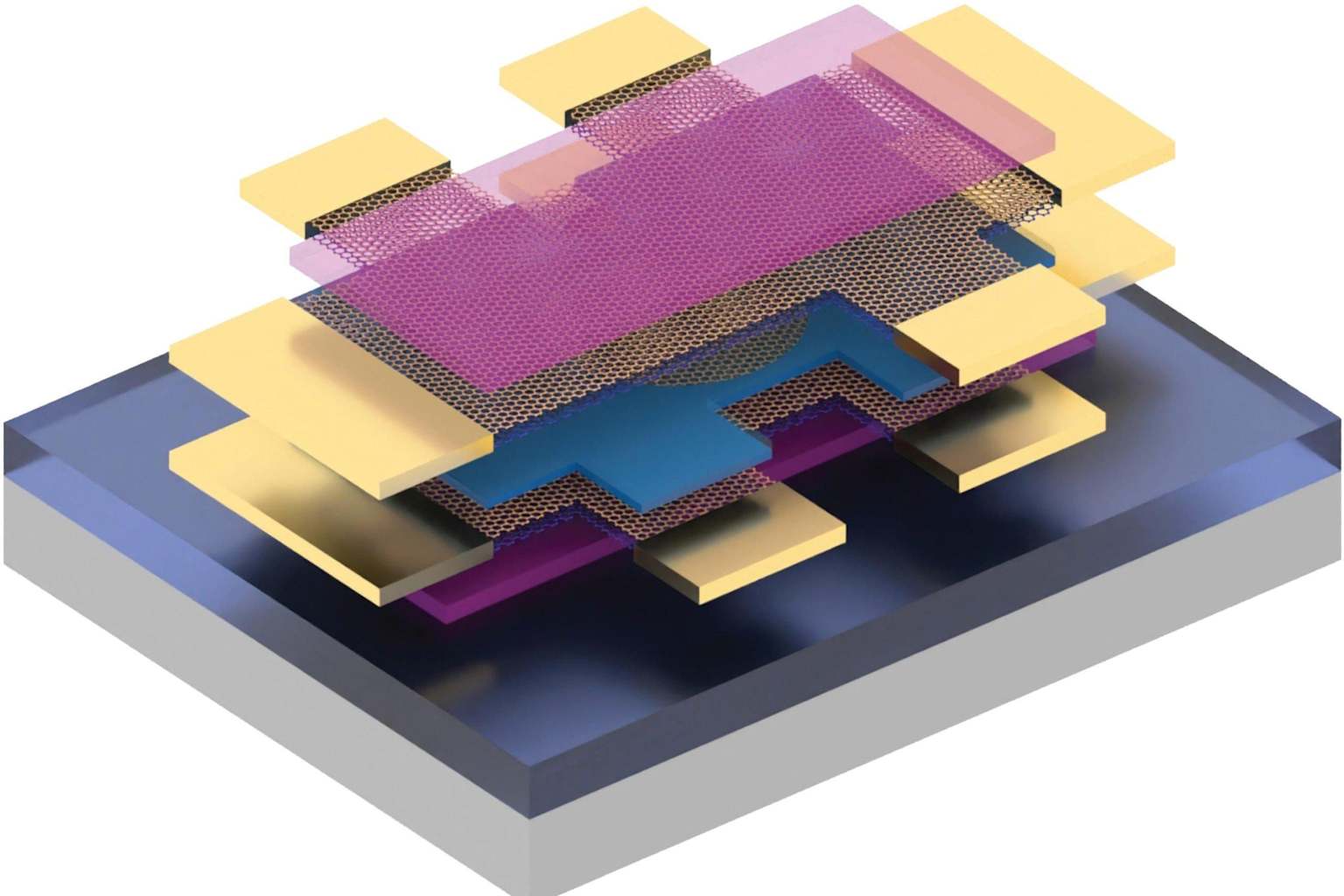
news.mit+1news.mitnews.mitResearchers at MIT have found that rhombohedral graphene — atomically thin layers of graphite stacked in a specific pattern — can host at least four distinct superconducting states, several of which defy conventional physics by surviving and even strengthening in the presence of a magnetic field. The findings, published June 29 in Nature, reveal what the team describes as "a new family of magnetic field-boosted superconductors."news.mit+1
Magnetic fields normally destroy superconductivity. In conventional superconductors, paired electrons have opposite spins, and an applied magnetic field pulls those spins apart, breaking the pairs. But in experiments led by MIT physicist Long Ju, three of the four superconducting states discovered in rhombohedral graphene persisted under magnetic fields up to around 9 tesla — roughly 180,000 times stronger than Earth's magnetic field.news.mit
More striking still, when the researchers applied a perpendicular magnetic field at a certain electron density, superconductivity did not merely survive — it grew stronger. "The superconductivity actually is enhanced, as in, the transition temperature goes from 55 millikelvin to probably 90 millikelvin," Ju explained. "At the same time, the material can take another 50 or 60 percent extra current before superconductivity gets destroyed. And that is very unusual."news.mit
The team proposes that in rhombohedral graphene, at certain electron densities, electrons may pair with their spins aligned rather than opposed. In this configuration, a magnetic field pulls both spins in the same direction, preserving their alignment and their superconducting behavior rather than disrupting it.news.mit
The discovery builds on previous work by Ju's group, which last year reported the first observation of "chiral superconductivity" in the same material — a state combining superconductivity with intrinsic magnetism arising from electrons' orbital motion.news.mit+1
The results establish rhombohedral graphene as a platform hosting multiple unconventional superconducting states within a single material. While the temperatures involved remain far below practical thresholds — tens of millikelvins above absolute zero — the findings offer physicists a new system to study exotic forms of superconductivity and the spin-triplet pairing mechanisms long theorized but rarely observed.nature+1